Relapsing frequently can be enormously frustrating and heart-rending and depressing. It feels like you’re on a road trying to get somewhere, but all you keep doing is making U-turn after U-turn and never getting anywhere.
And. And it can also be incredibly educational. When you’re paying attention to why you relapse, you get the gift of understanding what causes you to relapse. And that’s the best way to prevent it.
So as one part of my current resume, I’m trying to take a more preventative approach. What happens right before I relapse?
Well, looking over everything I’ve journaled about during relapses, it’s pretty clear that one of the following likely has happened:
— I’m tired. When I’m not getting 7 to 8 hours of sleep a night, I feel tired all day. It lowers my coping abilities. Little things get magnified. Things that normally would roll off my back — an irritating co-worker, unexpected traffic, my dog misbehaving — suddenly seem much more stressful.
— I’ve overloaded my calendar. Typically, I aim for no more than two big “things” every day. It could be two work things — giving two public speeches. It could be one work thing and one family thing — a public speech and then dinner with my husband. But it’s when I try to do three things that the going gets tough. When I try to do two public speeches and then dinner out, my stress level goes up and my willingness to break my abstinence increases.
— I’ve drifted from my abstinence check list. I’m not doing the things on my nightly checklist consistently. Maybe I skipped meditation or didn’t write three gratitudes. I didn’t feel like doing a daily reading. Whatever. My checklist isn’t complete.
— I haven’t planned ahead. I didn’t prepack my lunch or I decided to just wing it at the restaurant.
— I haven’t been keeping up with self-care. I haven’t been taking time every day to sit quietly with a cup of tea, take a warm bath, get myself an abstinent treat, or something like that. I haven’t taken time to appreciate and care for myself.
All of these things, really, are part and parcel of the same thing.
In all of these cases, a little something — a little lack of sleep or a little dip in keeping up with my checklist — turned into a snowball, which turned into a relapse.
So, turning it around, perhaps the best way to see a relapse coming and stop it dead in its tracks, is to watch out for the tiny little drifts away from your abstinent supports. A tiny little miss is the first sign that you might be on the path to a relapse.
Showing posts with label relapse. Show all posts
Showing posts with label relapse. Show all posts
Sunday, January 13, 2019

Tuesday, September 11, 2018
SeptemBLE Day 10 (Not Day 9)

And I didn't even hesitate. I knew I was feeling weak. Knew there were potato chips in the pantry. Deliberately went to the pantry, got them out and ate them. A lot of them.
There's no real question why. My husband and I adopted two pugs this weekend. Due to his prior commitments, my husband couldn't make the 4.5-hour drive with me to get them. The rescue group was lovely, but very uncommunicative so I had little idea what was going on and had to just go with the flow. The pugs are lovely little guys, but they were quite understandably stressed out and anxious. They woke up every 2-3 hours their first night.
So on Sunday I was tired, stressed out, and weak. Food helped, unfortunately.
But here's the really critical thing. I am not going to go back and start counting again on Day One.
I don't "reset" anymore every time I have a wobble. Because if I did, it would imply I'm back to Day One of doing Bright Line Eating (BLE). And I'm not.
Every single day of this journey I've learned something. For this particular break, I learned to pay close attention to my sleep patterns, which are major signals of an upcoming relapse.
What could I have done differently?
1) Insisted we work it out so that both hubby and I could travel to get the pups
2) Insisted, obnoxiously if necessary, on being informed of the plans so I wouldn't get anxiety over the not knowing
3) Trusted the history of the dogs' crate-training to know they'd be happier sleeping in their crate
4) Mentally prepared myself for the reality that moving to a new home is stressful for dogs. Logically, I knew this but I didn't really acknowledge it and brace myself for it.
These things are important boundary-setters. And boundaries are soooo important to my food journey.
So yesterday, September 10 was my TENTH day of the current resume. I'm not resetting to zero because I'm not at zero. Every day is a step in the right direction.
And as a follow-up, yesterday was a squeaky-clean awesomely bright BLE day.
Wednesday, August 29, 2018
AARRGGHHH Reset me to Day One
AAAAAAAAAARRRRRRRGHHHHH.
It happened again.
Reset me to Day One. I relapsed big time. After vowing for the umpteenth time that I was done with this food addiction once and for all, I gave in. Over the past week, I have devoured:
-- A wood-fired pepperoni pizza that wasn't even that good but I ate because I haven't "gotten to" eat pizza for so long
-- A $7 package of butter cookies that are my favorite brand that I specifically went shopping at the store where they are sold so I could buy them (though I told myself I wouldn't)
-- 3/4 of a bag of tortilla chips that weren't even that good but I no longer have an off switch so I just ate until I was embarrassed at how much I'd eaten.
-- A "fun-size" bag of cheese crackers and a "fun-size" bag of chocolate chip cookies that I bought because they are portion-controlled. Then an entire box of Wheat Thins.
It feels like I'm just shoveling food in my mouth to make the feelings go away.
I give up. I can't deal with this sobriety thing on my own. I surrender to the plan. I surrender to my higher power.
I cannot have just one bite
I cannot have just one bite.
I cannot have just one bite.
My affirmation calendar today says, "Life is tough, my darling, but so are you."
So. How am I going to turn things around?
-- Blog here every day about my journey and not pretend to know all the answers. I've researched a lot and I have read a lot. The facts are not in questions. But I need to be honest about what I'm going through. I need to be accountable here.
-- I need to VIGOROUSLY pursue ways to comfort myself when I don't know what's wrong. I am currently make a list of things to do and I publicly vow here to do so.
-- I need a penpal to report to twice a day about my sobriety
-- I need to bookend every morning and every night honestly about what I'm eating and whether I'm successful. Honestly.
-- I need to use my tools on a daily basis and vigorously pursue my nightly checklist.
I am, in short, using the tools I've used in the past AND adding more tools to the list.
Committing here and now that today will be a sober and clean Bright Line Eating day.
Phew. Sigh. Big lump in my throat at the rawness and honestly.
Wednesday, August 22, 2018
No Day Is So Bad You Can’t Make it Worse By Adding Sugar
One thing you have to remember if you’re trying to give up sugar:
No day is so bad that you can’t make it worse by adding sugar to it.
No day is so crappy it can’t be made crappier by adding sugar to it.
We think that adding some sugar (or flour or nuts or popcorn or whatever our own personal food devil it is), will bring soothing and happiness to our lives.
But it’s actually just the opposite. When you add crap to a crappy day, you make it crappier. You give yourself more fat, a headache, guilt, regret — a string of unpleasant, bad, unwanted feelings.
Remember that next time you’re having a bad day and think eating will make you feel better. Adding sugar to anything doesn’t make it better. It makes it worse.
No day is so bad that you can’t make it worse by adding sugar to it.
No day is so crappy it can’t be made crappier by adding sugar to it.
We think that adding some sugar (or flour or nuts or popcorn or whatever our own personal food devil it is), will bring soothing and happiness to our lives.
But it’s actually just the opposite. When you add crap to a crappy day, you make it crappier. You give yourself more fat, a headache, guilt, regret — a string of unpleasant, bad, unwanted feelings.
Remember that next time you’re having a bad day and think eating will make you feel better. Adding sugar to anything doesn’t make it better. It makes it worse.
Monday, June 18, 2018
Story Time: Life Seen Through an Empty Wrapper
It’s late at night and I’m sitting on my patio, looking at the moon, which is bright and very high. And the stars shimmering on the nearby pond. I should go inside and get some sleep. But before I do, I’m sitting here, finishing my tea and thinking. I’m thinking about you.
Yes, you. The one who is sitting on your patio, or in your living room, or at your kitchen table right now. Staring at an empty wrapper of something you just ate. Something you swore you would not eat today.
It’s not like you don’t know better. You know exactly what and how much you need to eat in order to lose your excess weight and free yourself from the demons of overweight and food obsession. Those demons you have been battling for years. You finally found a plan that works, and it worked beautifully. For a while.
Then somehow it didn’t work any more. You had an unusually stressful time at work. Or someone you dearly love passed away. Or it was a really, really, very special occasion. You just really wanted to celebrate or you just really needed to take the edge off.
Whatever it was, you decided to give yourself a little pass. Just for this once. You would go back to the plan right away, but on this one occasion you just really needed something.
So you had a little bit. And you went right back to the plan again.
Except that now the wolfie voice was awake again and whispering in your ear. You didn't know it was awake, but it was.
So in a short while, maybe a few days or maybe even a few weeks, you had a little more to eat off your plan. A bite here, a bit more there.
But really, still, you were going to go back to the plan, no question. But it would be tomorrow.
And then another tomorrow came and it happened again. You started the day with the best intentions but things happened and well, by evening you had veered off course again.
And then it happened again. What was going on? What was wrong with you? Why couldn’t you just resume successfully? You did it so well for a long time. For weeks and weeks, you were eating exactly according to plan and it wasn’t that hard. Why is it so hard now? Can’t you just Stop. Picking. Up. The. Food.
And maybe you even decided you needed to hide it. Can’t let anyone know you're eating uncontrollably again, after they have seen you do so well for so long. Maybe you hid a stash of goodies in the garage, or in an upper cabinet, or in your car, out of easy access. But in your heart, you know there's a good chance you'll go and get some, when the wolf voice is calling too loudly.
Maybe there are empty wrappers hidden in your car right now, so your spouse or your kids won’t know how much you’ve been eating in secret. Maybe you have stuffed wrappers into the bottom of your kitchen garbage can, so no one will find them.
And now, it's practically a daily thing. Every day, it’s the same. You wake up and vow to yourself that this is it. Today is the day you will resume your eating plan. For real this time. There is no way you are going to revert to old eating patterns. Not today.
But then life happens and you come home tired and it just feels like too much. So again you eat and now there’s an empty wrapper on the table.
You are not alone. I have been there. Dozens, hundreds, thousands have shared this experience.
This is what happens when wolfie takes over your brain. And it is absolutely, completely and unquestionably possible for you to resume successfully.
I want you to know that. I am sitting here right now because it was possible for me. And I never thought I'd be able to resume. If I can do it, and thousands of others can do it, why not you?
One way to start is by putting down the food right now.
Throw away that wrapper. Do the next right thing. Then do the next right thing. And then the next right thing. Keep doing the next right thing until you get where you want to go.

Yes, you. The one who is sitting on your patio, or in your living room, or at your kitchen table right now. Staring at an empty wrapper of something you just ate. Something you swore you would not eat today.
It’s not like you don’t know better. You know exactly what and how much you need to eat in order to lose your excess weight and free yourself from the demons of overweight and food obsession. Those demons you have been battling for years. You finally found a plan that works, and it worked beautifully. For a while.
Then somehow it didn’t work any more. You had an unusually stressful time at work. Or someone you dearly love passed away. Or it was a really, really, very special occasion. You just really wanted to celebrate or you just really needed to take the edge off.
Whatever it was, you decided to give yourself a little pass. Just for this once. You would go back to the plan right away, but on this one occasion you just really needed something.
So you had a little bit. And you went right back to the plan again.
Except that now the wolfie voice was awake again and whispering in your ear. You didn't know it was awake, but it was.
So in a short while, maybe a few days or maybe even a few weeks, you had a little more to eat off your plan. A bite here, a bit more there.
But really, still, you were going to go back to the plan, no question. But it would be tomorrow.
And then another tomorrow came and it happened again. You started the day with the best intentions but things happened and well, by evening you had veered off course again.
And then it happened again. What was going on? What was wrong with you? Why couldn’t you just resume successfully? You did it so well for a long time. For weeks and weeks, you were eating exactly according to plan and it wasn’t that hard. Why is it so hard now? Can’t you just Stop. Picking. Up. The. Food.
And maybe you even decided you needed to hide it. Can’t let anyone know you're eating uncontrollably again, after they have seen you do so well for so long. Maybe you hid a stash of goodies in the garage, or in an upper cabinet, or in your car, out of easy access. But in your heart, you know there's a good chance you'll go and get some, when the wolf voice is calling too loudly.
Maybe there are empty wrappers hidden in your car right now, so your spouse or your kids won’t know how much you’ve been eating in secret. Maybe you have stuffed wrappers into the bottom of your kitchen garbage can, so no one will find them.
And now, it's practically a daily thing. Every day, it’s the same. You wake up and vow to yourself that this is it. Today is the day you will resume your eating plan. For real this time. There is no way you are going to revert to old eating patterns. Not today.
But then life happens and you come home tired and it just feels like too much. So again you eat and now there’s an empty wrapper on the table.
You are not alone. I have been there. Dozens, hundreds, thousands have shared this experience.
This is what happens when wolfie takes over your brain. And it is absolutely, completely and unquestionably possible for you to resume successfully.
I want you to know that. I am sitting here right now because it was possible for me. And I never thought I'd be able to resume. If I can do it, and thousands of others can do it, why not you?
One way to start is by putting down the food right now.
Throw away that wrapper. Do the next right thing. Then do the next right thing. And then the next right thing. Keep doing the next right thing until you get where you want to go.

Sunday, June 17, 2018
BLE Relapse Recovery Strategy: Course Correction High Intensity Protocol
When my bright lines were hopelessly broken and I was eating again at will -- whenever the urge struck me, and often endlessly throughout the day -- I started poking around in the Bright Lifers social media page for tools that might help.
In the files section, I stumbled upon an idea that turned out to be a lifesaver.
The original document was titled "Nili's Course Correction High Intensity Protocol." I haven't been able to track down Nili to thank her for this. It saved my program several times. It saved me.
The concept builds, I think, on the idea that if committing to a full day of Bright Line Eating feels too daunting, then just commit to doing an hour. An hour is a lot easier to get through. An hour feels manageable.
And you can track it. Simply to make a chart with the days of the week listed across the time, and every hour of the day down the side.
You fill in "Bright Line Meal" at your regular meal times. And for every other hour of the day you write "No food at all."
Here's what my version looks like, based closely on Nili's original:

Print out a copy and carry it with you all day. Every time you successfully complete an hour's assigned task, put a big X in that hour's column.
After a while, I found myself spurred to get to the end of a day with a full row of X's in that day's column. I even used a bold red felt-tip marker to make my X's. It felt soooo good to have a full column of bright red X's. Having a full week of bright red X's was magical!
If your bright lines have broken and seem beyond repair, using a CCHIP chart might help.
[If you want a copy to print, you can find Nili's on the Bright Lifers Facebook group's "files" section, or message me and I can send you mine in Microsoft Word.]
[Disclaimer: I am not officially affiliated with Bright Line Eating and the ideas expressed here are my own.]
In the files section, I stumbled upon an idea that turned out to be a lifesaver.
The original document was titled "Nili's Course Correction High Intensity Protocol." I haven't been able to track down Nili to thank her for this. It saved my program several times. It saved me.
The concept builds, I think, on the idea that if committing to a full day of Bright Line Eating feels too daunting, then just commit to doing an hour. An hour is a lot easier to get through. An hour feels manageable.
And you can track it. Simply to make a chart with the days of the week listed across the time, and every hour of the day down the side.
You fill in "Bright Line Meal" at your regular meal times. And for every other hour of the day you write "No food at all."
Here's what my version looks like, based closely on Nili's original:

Print out a copy and carry it with you all day. Every time you successfully complete an hour's assigned task, put a big X in that hour's column.
After a while, I found myself spurred to get to the end of a day with a full row of X's in that day's column. I even used a bold red felt-tip marker to make my X's. It felt soooo good to have a full column of bright red X's. Having a full week of bright red X's was magical!
If your bright lines have broken and seem beyond repair, using a CCHIP chart might help.
[If you want a copy to print, you can find Nili's on the Bright Lifers Facebook group's "files" section, or message me and I can send you mine in Microsoft Word.]
[Disclaimer: I am not officially affiliated with Bright Line Eating and the ideas expressed here are my own.]
Saturday, June 16, 2018
When you’re afraid to resume BLE because you’re afraid to fail again
One of the biggest struggles I have faced in Bright Line Eating is how to resume after breaking my bright lines repeatedly. How do you get your bright lines back after you’ve broken them ... again and again and again.
And in the back of my brain was always the niggling thought, “What if I break my lines again? What if I fail again?”
For me, this usually quickly escalated into “I fail everything.” “Of course I’m going to fail again.” “Why should this be any different?”
So the other day, I sat down for a good chat with myself. I decided to do what I've read is good for when obsessive thoughts start wandering around in your brain. I challenged myself to turn those thoughts around.
Sure, I'm afraid of breaking my bright lines again. But that doesn’t mean this fear is a bad thing.
It’s perfectly OK - it could even be good -- to be nervous about trying again. That just means I know Bright Line Eating is a good idea. I know this is what I want.
For another, it means I know that overcoming food issues will be tough. I don’t think it’s going to be a breeze. That'll be helpful when a craving or challenge strikes.
And there will be cravings and there will be challenges. I know I’ll get stressed and want to eat. I know I’ll want to eat. These things are going to happen. That's just life. It's OK and it's not an excuse to break my bright lines.
And that means I can take the next step. I'm not doing BLE because I think I'll never be hungry and have cravings and want to eat like crazy again. I'm doing it because I don’t want all the crappy things that come with eating addictively — the constant thinking about food, the headaches, the low energy, the pasty skin, the obesity, the not being able to go on roller coaster rides, the needing seatbelt extenders on airplanes, the diabetes, the losing everything.
And you know what, it worked. I'm not so nervous about making resuming BLE again. As always, when I break my bright lines, I learn from the experience, pick myself up and start all over again.
Relapse sucks and it's great if it never happens. But fear of relapse isn’t bad. You can learn a lot if you sit down and listen to your fears.
And in the back of my brain was always the niggling thought, “What if I break my lines again? What if I fail again?”
For me, this usually quickly escalated into “I fail everything.” “Of course I’m going to fail again.” “Why should this be any different?”
So the other day, I sat down for a good chat with myself. I decided to do what I've read is good for when obsessive thoughts start wandering around in your brain. I challenged myself to turn those thoughts around.
Sure, I'm afraid of breaking my bright lines again. But that doesn’t mean this fear is a bad thing.
It’s perfectly OK - it could even be good -- to be nervous about trying again. That just means I know Bright Line Eating is a good idea. I know this is what I want.
For another, it means I know that overcoming food issues will be tough. I don’t think it’s going to be a breeze. That'll be helpful when a craving or challenge strikes.
And there will be cravings and there will be challenges. I know I’ll get stressed and want to eat. I know I’ll want to eat. These things are going to happen. That's just life. It's OK and it's not an excuse to break my bright lines.
And that means I can take the next step. I'm not doing BLE because I think I'll never be hungry and have cravings and want to eat like crazy again. I'm doing it because I don’t want all the crappy things that come with eating addictively — the constant thinking about food, the headaches, the low energy, the pasty skin, the obesity, the not being able to go on roller coaster rides, the needing seatbelt extenders on airplanes, the diabetes, the losing everything.
And you know what, it worked. I'm not so nervous about making resuming BLE again. As always, when I break my bright lines, I learn from the experience, pick myself up and start all over again.
Relapse sucks and it's great if it never happens. But fear of relapse isn’t bad. You can learn a lot if you sit down and listen to your fears.
Tuesday, June 12, 2018
The unique struggle of starting BLE from a smaller number

Bright Line Eating recently added special interest groups and I'm thrilled. Hooray! A way to make the big Bright Lifers facebook group seem smaller and less intimidating. A way to connect with people who share your struggles.
And ... there was no group for me.
Sigh.
I was hoping there might be a group for people who have relapsed repeatedly (yeah, that would be me). Or introverts who avoid phone calls the way vampires avoid the sun (also me).
Or ... for people who began with smaller numbers.
Now, that last statement might make you pause. Aren't the people coming from larger weights the ones who need Bright Line Eating most? Isn't their weight often a serious health issue? Even a life-and-death situation?
Yes. Yes. And yes.
And.
And I am convinced that people who begin the program at lower weights have unique struggles and challenges. I don't say worse. Not bigger. Not more important. But unique and absolutely challenging struggles.
I've been thinking about this a lot ever since I read somewhere that some members of Overeaters Anonymous feel resentful of people who come into meetings and don't look obese. That broke my heart, because my fight with food (and I bet many others' fight) has been decades-long and immensely painful, even though you might not see it as clearly on the outside.
So here's my attempt to address the issues, for those curious about why people who struggle with food addiction but don't have huge weight problems have unique challenges:
1. It's easy for us to tell ourselves "it's not that bad. I don't need to address my food issues."
I've been a food addict for at least 39 years, going back to the days when I hid candy in my childhood puppet theater and sometimes bought two ice cream cones pretending one was for a friend, even though I planned to eat them both. I once bought a box of cake mix so I could eat the whole thing out of the box. In high school, I never ever ever wore pants without a long sweater or tunic over it, to hide the "enormous" size of my butt (I wore a size 12 at the time). Food issues tortured me through high school, college, graduate school, my early career. Years and years.
Still, with restriction and deprivation, I managed to keep my weight in the "overweight" category. At my heaviest, I wore a size 18 on my 5'7" frame — very upper limit of overweight-but-not-obese. But thoughts of food consumed me. It was my best friend, my go-to resource, my constant companion. I hid food from my roommates so they wouldn’t eat it. I panicked if the kitchen didn’t have enough sugary treats in it. I carefully planned trips according to what I could eat on the road.
But when you're not obese, it's easy to tell yourself that your problems just aren't that bad. If you really had a problem with food, you'd be heavier. You're not, so you must be someone who just really really really likes food.
So committing to any food recovery or weight-loss plan was incredibly difficult for me. It was so tempting to quit when it got hard. I would look at people who were obese and reassure myself that I was not as bad as them. They had a problem, but clearly I didn’t.
Except, of course, I really did.
2. Since we're not as heavy as other people, it's easy to make little exceptions that lead to big falls.
I relapsed about 2 weeks after my first Bright Line Eating bootcamp ended.
Yep. Two weeks.
It was Christmas. All my favorite treats were around. I told myself, "hey, I did this thing successfully for 8 weeks. I did great and after all, I'm not as heavy as some of the other people in bootcamp were when we all started. I afford to make one exception. I don't have all that much weight left to lose. Besides, these goodies were made by my niece, who I adore. It would hurt her feelings if I didn’t eat at least one. I can afford to have just one."
So I did. That "just one" led to a string of bright-line breaks, which led to 18 months of heart-breaking, challenging, unsuccessful attempts to resume Bright Line Eating. Eighteen. Months.
Actually, I'd told myself all through Boot Camp that my issues weren't as bad as some others. I hadn't even started Bright Line Eating in order to lose weight. I didn't mind the idea of losing weight, but I'd be OK if I stayed where I was (at the time, at 181 pounds).
So I'd made some little exceptions right from the beginning. Kept the won-ton strips on my Asian salad. Ate some popcorn a few nights when the hunger was really bad. Had a piece of bread in a restaurant if it was a special occasion.
Not surprising, others in my Boot Camp House hung on to their bright lines afterwards for much, much longer. Whenever I poked into Facebook houses, they were talking how they still had squeaky-clean bright lines 10, 25, 50 weeks after boot camp ended. I read the stories of how they'd lost 30 pounds, 50 pounds, 70 pounds. They were wearing smaller clothes and posting photos of huge celebrations.
And there I was, stuck, not moving down any further than my initial 17-pound loss, consumed by my addictive food voice, unable to lose any more and completely unable to resume successfully.
3. It’s easy to feel guilty for being in a weight-loss program, like you’re doing it for selfish and vain reasons, rather than addressing a serious food issue.
One of the first Bright Line Eaters I met in person, rather than virtually, said to me, not long after we met, "Oh, you're in maintenance, right?"
At the time, my BMI put me still in the "over-weight" category. Not even close to the weight goal of 140 I’d set for myself. Miles away from the goal weight of 120-130 for the French plan Susan Peirce Thompson described in Boot Camp.
I felt like a loser, so miserable since I was having so much trouble resuming Bright Line Eating. Her sweet comment, clearly intended as a nice complement, should have made feel proud to be where I was.
Instead it made me feel selfish and vain. Why did I think I even needed to keep doing this food plan? Clearly, I looked fine to others. Was I just wanting to get a handle on my food for vanity's sake, so I could wear skinny jeans and look like a model? It felt like I didn't have a right to want this -- I just needed to get over my vanity and accept my body where it was.
Final Thoughts
Again, I don’t say that food-recovery issues for a person beginning at a smaller number are worse or larger or more painful than for others. But I do say that there are struggles and they are unique struggles.
My particular struggles with relapsing over and over have a lot to do with these challenges.
So in a variation of what Susan Peirce Thompson says about the temptation to monitor what others are eating — I say, when it comes to how much weight a person does or does not have to lose, I really have to keep my eyes on my own plate, not compare myself to others, and remember why I'm on this journey.
[Disclaimer: I am not affiliated with Bright Line Eating or Susan Peirce Thompson. The ideas expressed here are my own.]
Friday, June 8, 2018
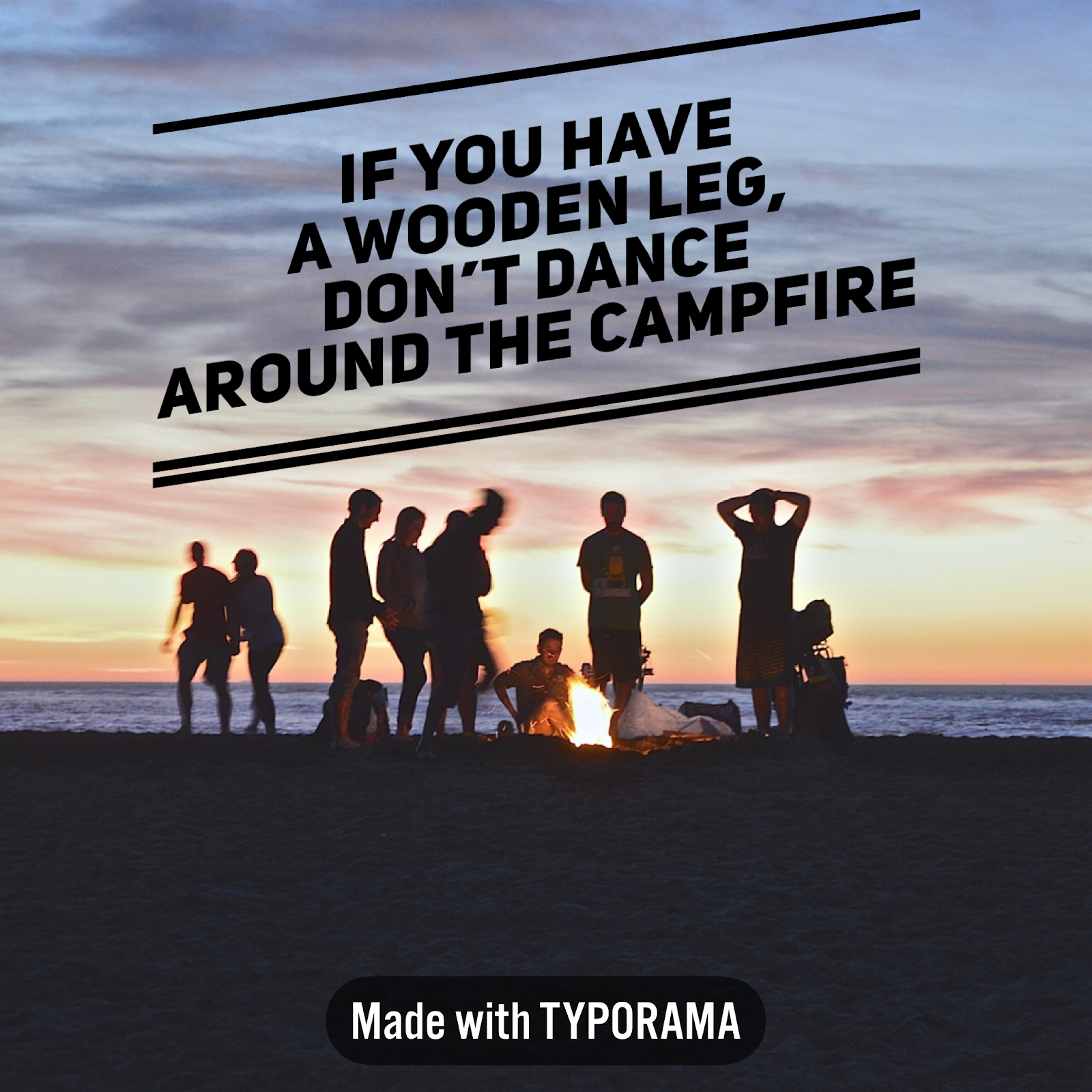
"If you have a wooden leg, don't dance around the campfire"
Quick thought for the day:

In the grocery store yesterday, I was remembering how when I first gave up sugar and flour, I'd still buy bread and treats for my husband (didn’t want to deprive him). I picked up goodies at the bakery to bring to clients (didn’t want to deprive them). I even went to restaurants where my favorite desserts were sold (didn’t want to deprive my family).
Hanging out at goodie-filled restaurants and passing through the bakery section of my grocery store made me feel like I wasn't abnormal. I was still living in the real world. Sure, I didn't eat that way any more but I still had the fun of choosing yummy goodies.
Yeah. After relapsing a few times, I realized that I simply had no business in any restaurant or store or part of a store, where sugar and flour items that I really, really, really like are sold. It stressed me out and tempted me. It just set me up for a relapse.
Avoiding encounters with tempting food makes my life so much easier.
And helps me stay true to my belief that no one really needs to eat sugar and flour the way we do in our society.
In the grocery store yesterday, I was remembering how when I first gave up sugar and flour, I'd still buy bread and treats for my husband (didn’t want to deprive him). I picked up goodies at the bakery to bring to clients (didn’t want to deprive them). I even went to restaurants where my favorite desserts were sold (didn’t want to deprive my family).
Hanging out at goodie-filled restaurants and passing through the bakery section of my grocery store made me feel like I wasn't abnormal. I was still living in the real world. Sure, I didn't eat that way any more but I still had the fun of choosing yummy goodies.
Yeah. After relapsing a few times, I realized that I simply had no business in any restaurant or store or part of a store, where sugar and flour items that I really, really, really like are sold. It stressed me out and tempted me. It just set me up for a relapse.
Avoiding encounters with tempting food makes my life so much easier.
And helps me stay true to my belief that no one really needs to eat sugar and flour the way we do in our society.
Wednesday, May 30, 2018
8 great ways to screw up your healthy eating plan

Adapting to a no-sugar, no-flour, no-snack lifestyle is a marathon, not a sprint. If you keep relapsing, it might help to pay attention to the moments when you trip up. What actions or beliefs contributed?
Here are the most likely culprits that have tripped me up in the past:
1. Believing that I only have a real problem with one substance (e.g. sugar) so I can continue to use others (e.g. flour) to get me through.
2. Thinking it will be easier to just moderate my eating, rather than giving up sugar and flour entirely. For me, abstinence is much easier than moderation. It’s taken me a long time to really believe this.
3. Continuing to ignore how much any deviation from my food plan hurts my progress. I know that no-sugar/no-flour/no-snacking momentum is hard to achieve, but my brain tells me it's easy to do so it’s OK to have “just one bite.”
4. Expecting that I can just do healthy eating for a while, till I get my weight down, and then I can go back to "normal" eating. There is nothing normal about eating tons of sugar/flour and very little produce. Freedom from food issues is a permanent lifestyle change.
5. Taking little or no responsibility for my own recovery. I have a tendency to get mad that phone calls and food buddies aren't the best supports for me. It's up to me to try lots of things and find the supports that do.
6. Believing that therapy will "cure" my food issues. Therapy is a life-changing, empowering process that can be transformational in your food journey, but it didn't make me magically, suddenly never want to eat addictively again. Therapy is one tool among many others.
7. Expecting that my experience will be the same as others. Successful people can provide helpful roadmaps and guidance, but I can’t expect my journey to be exactly like theirs. My journey is my own and it will be unique to me. That's normal and it's fine.
8. Believing that I can skimp on serious self-care. I absolutely must make self-care (saying no, taking time for myself, taking naps, going to bed early, enjoying free time to read or walk in the woods, taking warm baths and meeting with friends) my top priority in my tool kit. Extreme self-care is the number one thing I do to heal my food issues.
These beliefs are very seductive and have pulled me in over and over again. Giving up these beliefs is my daily practice.
Tuesday, May 29, 2018
Recovery expectations versus reality
Day 6 of current resume completed. Treat: Magazine with cover story on royal wedding
In a food recovery journey, it sometimes feels like everyone else is having a much easier time.
But actually, most people’s food recovery journeys are filled with U-turns and wrong directions and resuming and misdirections.
This great illustration sums it up perfectly:

I found it HERE.
.
In a food recovery journey, it sometimes feels like everyone else is having a much easier time.
But actually, most people’s food recovery journeys are filled with U-turns and wrong directions and resuming and misdirections.
This great illustration sums it up perfectly:

I found it HERE.
.
Friday, May 18, 2018
My emergency action plan didn’t work. Here’s what does

The other day, I posted about why my emergency action plan (my plan for what to do when I’m about to eat food off my plan) never works.
At the moment where I’m standing in front of the fridge or the open cabinet, it’s too late. The train had left the station.
So here’s what I’m doing now. Instead of an “emergency action plan,” I’ve put together a pre-emergency emergency action plan. A PEEAP. This is my plan for what to do when the stress and overwhelm first begin, often a few days early, when the food thoughts pop into my head, when I first sense that I might be heading for break. This is when I’m at a 3 or 4 or 5 on my “I’m-gonna-eat” scale, rather than at a 9 or 10. Want to know what those first signs are? I wrote about them HERE.
My PEEAP consists of a list of tools I undertake to avert an emergency. It’s pretty particular to me since I know by now what my weak spots are.
First, get a really good, long sleep. Go to bed super early. Get 9 or 10 hours sleep, if possible. Sleep deprivation is a huge stressor for me and many of my food plan breaks happen when I’m lacking sleep.
That didn’t work? OK, on to the next tool.
Take a spa bath (candles, spa music, low lights, scented oil in tub).
That didn’t work?
Take a long walk out in nature, like a forest preserve.
That didn’t work?
Get yourself a treat for keeping to your food plan. Obviously, not a food treat. Treat yourself to fresh flowers, a new lipstick, a trashy magazine, anything special that you explicitly say is your treat for keeping to your food plan.
That didn’t work?
Make a list of everything you have to do and start cutting it down. What can you eliminate? What can you delegate? What can you do quickly to get it done and off your plate? Strive to get stuff off your plate and off your shoulders.
You get the idea. You just go from A to B to C to D and so on until you feel the stress start to ease.
Your list might be very different. Getting a good long sleep might not be an option. Calling a friend or sponsor might work for you.
The point is, get a PEEAP toolkit and at the first sign of trouble, starting ticking through them. Do as many as you need to do to head off an emergency.
Thursday, May 17, 2018
Is your emergency action plan not working? This might be why
So last night, I ate. And ate and ate and ate. First, I ate my prepped and pre-planned healthy meal. Then healthy stuff I had not planned. Then borderline-healthy stuff that was close to crap as I could possibly get. I ate until I felt ill.
It’s no big secret what caused it. It’s been a busy spring for me, without a single full day off in about 11 weeks. There were a few days where I had to drive 2 hours each way to gigs. I’m in the car on average 4 hours a day, often in rush hour traffic or, ugh, construction.
All day yesterday, I was in full-on “OMG I have to eat right now” mode. Every food store was singing to me. Restaurants were unbearable to pass. I drove past a bakery and almost had a meltdown.
By which I mean: I knew this was coming. My body was screaming at me — enough enough enough. I am strung-out and worn-out. I want to eat and I want to eat now.
When I was standing in front of the pantry, reaching for the bag of non-food, there was not a single thought of my emergency action plan (EAP) in mind (the plan of what to do if temptation hits. I even keep a copy of it in my wallet: Call a friend, take a walk, journal, meditate, take a bath with candles and spa music.)
It didn’t work for me for the same reason it has almost never worked for me. At the moment I was standing in front of the pantry, it was too late. I was already over the edge and gone. Nothing was going to make me reach for emergency action plan, much less reach for the phone, by that point. In fact, it didn’t even occur to me to look at it.
Listening to coaching calls from other Bright Line Eaters, you often hear the same thing. It often doesn't even occur to people to look at their EAP when they are in the moment.
That got me thinking. Maybe "in the moment” is too late. Maybe the time to intervene was earlier. Maybe I should have intervened in the days when I first started feeling the tiniest bit tired.
It didn’t happen, and so the exhaustion continued and the stress just built. Day by day, stressor by stressor, until on about day 5, I snapped. On the “I need to eat and I need to eat now” meter that goes from 1 to 10, I was at 11.
Maybe if we can recognize when we are in “pre-slip” or “pre-binge” or “pre-relapse” mode, when we’re at a 2 or a 3 or a 5, maybe that is a better time to step in.
And, really, it’s not that hard to recognize when it's happening.
Here are some easy steps to recognize when you are in "pre-bright-line-break" or "pre-break" or “pre-relapse” mode:
1) You stop using all your tools consistently. “
I’m too busy today to meditate." "It won’t hurt to skip just one day.” “I’m just bugging her calling her every day.” "I'm too tired to write in my gratitude journal tonight."
2) You let in little slips to your meal plan.
Not full-on binges, just a few little bites. “I’m just going to eat a few almonds to take the edge off my hunger.” “A few extra ounces of fruit won’t hurt.” “It’s the end of the salad dressing anyway, I should just use it up.” Little slips open the door.
3) You are having a lot more thoughts about food.
You're more aware of the fast food places you drive past. You think more about what you're going to have for dinner. You daydream about treats.
4) You feel overwhelmed.
This is the big one. You start thinking “It’s too much work.” “I am exhausted.” “Why is this so hard?” It doesn’t even have to be that you're overwhelmed about food. It can just be about life — about the diapers piling up or the emails that won’t stop or the people constantly begging for your attention or the rush-hour traffic.
That is when you need to snap to attention. Intervene now. Stop the nonsense before it builds into a break in your food plan or a full-on binge.
Coming up next: How to create a pre-emergency emergency action plan to head off a bright line break or food relapse.
[Disclaimer: I am not affiliated with Bright Line Eating or Susan Peirce Thompson. The ideas expressed here are my own.]
It’s no big secret what caused it. It’s been a busy spring for me, without a single full day off in about 11 weeks. There were a few days where I had to drive 2 hours each way to gigs. I’m in the car on average 4 hours a day, often in rush hour traffic or, ugh, construction.
All day yesterday, I was in full-on “OMG I have to eat right now” mode. Every food store was singing to me. Restaurants were unbearable to pass. I drove past a bakery and almost had a meltdown.
By which I mean: I knew this was coming. My body was screaming at me — enough enough enough. I am strung-out and worn-out. I want to eat and I want to eat now.
When I was standing in front of the pantry, reaching for the bag of non-food, there was not a single thought of my emergency action plan (EAP) in mind (the plan of what to do if temptation hits. I even keep a copy of it in my wallet: Call a friend, take a walk, journal, meditate, take a bath with candles and spa music.)
It didn’t work for me for the same reason it has almost never worked for me. At the moment I was standing in front of the pantry, it was too late. I was already over the edge and gone. Nothing was going to make me reach for emergency action plan, much less reach for the phone, by that point. In fact, it didn’t even occur to me to look at it.
Listening to coaching calls from other Bright Line Eaters, you often hear the same thing. It often doesn't even occur to people to look at their EAP when they are in the moment.
That got me thinking. Maybe "in the moment” is too late. Maybe the time to intervene was earlier. Maybe I should have intervened in the days when I first started feeling the tiniest bit tired.
It didn’t happen, and so the exhaustion continued and the stress just built. Day by day, stressor by stressor, until on about day 5, I snapped. On the “I need to eat and I need to eat now” meter that goes from 1 to 10, I was at 11.
Maybe if we can recognize when we are in “pre-slip” or “pre-binge” or “pre-relapse” mode, when we’re at a 2 or a 3 or a 5, maybe that is a better time to step in.
And, really, it’s not that hard to recognize when it's happening.
Here are some easy steps to recognize when you are in "pre-bright-line-break" or "pre-break" or “pre-relapse” mode:
1) You stop using all your tools consistently. “
I’m too busy today to meditate." "It won’t hurt to skip just one day.” “I’m just bugging her calling her every day.” "I'm too tired to write in my gratitude journal tonight."
2) You let in little slips to your meal plan.
Not full-on binges, just a few little bites. “I’m just going to eat a few almonds to take the edge off my hunger.” “A few extra ounces of fruit won’t hurt.” “It’s the end of the salad dressing anyway, I should just use it up.” Little slips open the door.
3) You are having a lot more thoughts about food.
You're more aware of the fast food places you drive past. You think more about what you're going to have for dinner. You daydream about treats.
4) You feel overwhelmed.
This is the big one. You start thinking “It’s too much work.” “I am exhausted.” “Why is this so hard?” It doesn’t even have to be that you're overwhelmed about food. It can just be about life — about the diapers piling up or the emails that won’t stop or the people constantly begging for your attention or the rush-hour traffic.
That is when you need to snap to attention. Intervene now. Stop the nonsense before it builds into a break in your food plan or a full-on binge.
Coming up next: How to create a pre-emergency emergency action plan to head off a bright line break or food relapse.
[Disclaimer: I am not affiliated with Bright Line Eating or Susan Peirce Thompson. The ideas expressed here are my own.]
Saturday, May 5, 2018
I've tried so many times and failed, why should I try again?
About 14 months into my fight to successfully resume Bright Line Eating, things
got really depressing.
Every time I decided that this was IT, today would be the day I resumed, every
time I printed out a new 100-day chart, posted a commitment in social media,
joined with a friend to do a 60-day challenge, that annoying little voice in my head would begin:
"You’ve tried this so many times and failed, why do you think
you’ll succeed now?"
"This will be just like the last time: a few days with squeaky-clean bright lines and then more bright lines broken."
"With all these failures, how can you trust yourself or this
program anymore?"
Today I’m challenging myself to answer that voice. I want
some ammunition to toss at that dang voice to make it shut up. Here goes:
n Sure, I could fail again. But then again, I could succeed. I’ve failed
at other things before I succeeded. Maybe this is just like that.
n Don’t statistics show that people who quit smoking often make multiple
attempts before succeeding? Maybe my food journey will be similar. (I wrote about this on another blog post HERE.)
n I just need to figure out what will work for me in getting my lines
bright. Trying again is exactly what I need to do to learn what’s needed to
stay on track. If something in my BLE toolbox needs to change, I can change it.
n I give in now, and decide I’m going to fail, that’s just what will
happen. If I claim defeat, I’ll be defeated.
It might take you 5 or 8 or 25 failures – or more – but if you’re
not willing to risk failure, you’ll never get to success.
Henry Ford said it really well: “If you think you can, or you think you can’t,
you’re always right.”

Friday, May 4, 2018
Three Things to Stop Doing If You Want to Hit Your Food Goals

It took forever for me to figure out what to stop doing and how to stick to my bright lines.
If you've been struggling with resuming, or getting yourself to eat according to your food plan regularly, here are some mistakes you too might be making:
(1) Focusing on your weight, not your days with bright lines.
Susan Peirce Thompson says this over and over because it's true: If you focus on your weight, you'll lose your bright lines. If you focus on your bright lines, you'll lose the weight.
But oooohhh, it's so tempting to keep weighing yourself regularly when the plan is working. It feels so awesome to see the scale move down and the pounds drop off. Hooray! It boosts your motivation and keeps you revved up to continue.
So what's the problem? Well, inevitably the scale stops moving. You hit a plateau. You've been doing BLE for a long time and the rapid losses slow down. You start struggling and breaking your lines. Whatever it is, the weight loss slows or stops.
For me, that meant a sudden and immediate plummet in my motivation and willpower. My addictive voice would jump in: "Why are you starving yourself if you're not losing weight? What is the point? Why bother with all this work if you're not even losing?"
Only after this happened multiple times did I realize, I just can't use the scale as a motivator. For every time it helped me, there are as many times it really hurt me.
So I hid the scale for a long time and even now only weigh myself once a week, if not once every few weeks.
I measure my success by the number of squeaky-clean days on my calendar -- I put a gold star sticker on my calendar for each clean day. I do NOT measure my success by my weight.
(2) Thinking you don't have to do the work.
Ever had a situation like this? You wake up feeling fresh and motivated. Today you will eat clean! You will eat only what you planned for the day! You will not break a single bright line!
Then your day begins. Stressful things happen. You get in an argument, your workload increases, you get stuck in traffic. Whatever. Your thoughts turn to food. By the time you get home, you've convinced yourself that "a little treat won't hurt."
I must have done this a hundred times. It was so easy to make those vows -- and so easy to break them.
And I was usually baffled. I was still doing all my tools -- writing my gratitudes list, committing my food, meditating, writing in my 5-year journal. Why weren't these keeping my lines bright???
It took me forever to figure out that keeping my lines bright takes work. The tools are useful, but they aren't the work itself. They're just the support for the work.
That means: You keep your bright lines bright and you do whatever you need to do to keep them bright.
For me, I have to make bright line eating a priority. Maybe not forever, but for sure for now. I have to use all my support tools. I have to blog, and read clean eating blogs, and follow Instagram folks, and listen to sober podcasts, and commit my food, and prep my food, and bring my meals with me.
I have to keep my bright lines bright. That's the work, and it's hard, but I have to do it.
(3) Thinking food is the key to happiness.

When I first considered giving myself a treat for every day that my lines are bright, I couldn't thinking of any treat other than food. [Read my post on treats HERE.]
Anything else -- a trashy magazine, a new kind of tea, a new lipstick -- I'd just buy anyway. I could not imagine anything giving me joy the same way food did.
And I get it. It's hard to imagine celebrating a birthday without a special dessert. What else can make Christmas or Valentine's Day a special celebration other than all the food treats that come with it? When you've had a hard day, what will calm you down and make you happy better than food?
And the sad thing is, food works. It does bring happiness and calm and joy in the moment.
I spent way too many years treating food like some kind of joy juice. It was the secret to making life special.
Except it's not.
Sugar and flour are (as far as I'm concerned) drugs. If all we needed to bring joy into our lives was some sugar and flour, then we'd be able to predictably get joy from it. But we don't. People who eat massive amounts of sugar and flour aren't leaping through their days on a joyful journey of perpetual happiness.
And, I know plenty of people whose lives are filled with joy who never eat sugar and flour.
Finding other ways to bring joy, happiness, contentment and peace to your life is critical to long-term BLE success for me. I'm doing everything I can to find other things besides food that make me joyful.
[Disclaimer: This blog is not affiliated with or endorsed by Bright Line Eating Solutions or Susan Peirce Thompson. The opinions expressed here are entirely my own.]
Tuesday, May 1, 2018
Failing to have squeaky clean days doesn't make you a failure
"Success is the ability to go from failure to failure without losing enthusiasm" -- Winston Churchill

I'd print out 100-day charts and put a gold star on every day when my lines were squeaky clean.
When I broke after day 5 or day 14 or whatever, I'd crumple up the chart and toss it. I’d failed. Again.
After starting and then tossing about ten 100-day charts, I stopped using charts. What's the point? It was just demoralizing to keep throwing them away and starting over.
But today I realized there's another way to think about it. Squeaky-clean days are to a food person what cigarette-free days are to a smoker trying to quit: That's the goal, but it’s hard to get on the first try. It takes most people some failure before they get there.
Think about this: The National Institute on Drug Abuses reports that relapse is common in drug addiction treatment, and estimates relapse rates to be between 40 and 60 percent.
Quitting cigarettes is just as hard. The U.S. Centers for Disease Control and Prevention says it takes 8 to 11 attempts for a smoker to successfully quite. The American Cancer Society suggests 8 to 10.
Anyone trying to quit addictive food behaviors -- that is, to get squeaky clean bright lines -- might find failure is as normal a part of their journey too. You might well have to experience some failure before you succeed.
That’s fine. You can learn something from every time you break a bright line. You can get right back onboard and keep going. What matters is THAT you keep going.
George Custer motto is a good one to remember: "It's not how many times you get knocked down that matters. It's how many times you stand back up."
Disclaimer: This site is not officially affiliated with Bright Line Eating or Susan Peirce Thompson. The opinions expressed here are entirely my own.
Friday, April 27, 2018
Self-Care Idea: The Pregnancy Principle

Why is it so hard for many of us to practice self-care?
Maybe there’s something about people who turn to food that makes us want to take care of others before ourselves. All. The. Frigging. Time.
One of the most life-changing things about doing BLE is that you almost have to learn to practice self-care. You have to eliminate anything that feeds the driving need to pick up food.
As I’ve been struggling over and over to resume, I came across a super helpful article by a sober blogger about how to take care of yourself in the early days of recovery process. It’s by Laura McKowen and called the “Pregnancy Principle.” (I’ll link to the article below).
She’s talking about the early days of alcohol sobriety, but the idea works just as well for thinking about the early days of a serious BLE resume. (In reading her article, I just substituted "food" whenever she says "alcohol.")
The idea is this: Imagine how you would take care of yourself if you were pregnant. When your well-being comes first. No one asks a pregnant woman why she's being careful with her energy and her time. At this hard time in your life, you too can -- must -- be unapologetically selfish with your energy and your time.
No one would ask a pregnant woman to attend an event when she’s feeling tired. No one would think twice if a pregnant woman needed to eat a special way. Or go to bed at 7:30. Or avoid any situation other than what she absolutely must attend.
This doesn’t mean you actually tell people you’re pregnant. That’s not what it’s about.
It’s about how you treat yourself. Strip out everything that’s inessential and treat yourself with loving care.
Start saying no a lot. Cut back. Go to bed early. Stop answering every text right right away. If you don't want to host a birthday party in your house because you don't want cake there, don't do it. If you have family over for dinner, don't feel like you have to serve them pizza. And don't apologize for anything. Be unapologetically selfish with your time.
I’m not explaining it nearly as well as Laura does, so read the article yourself.
My point is just that getting your bright lines back is really hard work. It takes energy and focus, and to do it well you have to take exceptionally, selfishly good care of yourself.
You can read Laura’s article on her blog HERE.
Friday, April 20, 2018
BLE is like a car trip. You can't keep going back home.

Anyone who has ever gone on a long car trip knows, it's a progressive thing. You can't load up the car, head out on the highway, drive for a few hours, turn around and go home -- and then pick up your journey again the next day right where you were the day before.
It doesn't work that way. You can't turn around and go home. Not if you want to get where you are going.
BLE is like that. It can be tempting to "go back home" sometimes. Maybe it's a special occasion. You're on vacation. Someone made a delicious treat that you really want. You've had a hard day. You'll just go home for a little while and then resume your journey.
On a car trip, when you don't keep going home over and over, you're forced to travel on a new road to get where you want to go.
In the same way, in BLE, when you don't keep making U-turns, you have to (get to!) travel on a new road.
Every time you don't stop your journey -- when you say it doesn't make any difference that I'm on vacation or that it's a special occasion, I'm still not eating sugar and flour -- you are forced to learn new habits. You learn how to celebrate without food. You learn how to calm and relax yourself without food. You learn how to say no without feeling guilty.
Don't make U-turns. Don't keep going back home, no matter how comfortable it sounds. Constantly going back home won't get you where you want to go.
Disclaimer: This site is not officially affiliated with Bright Line Eating or Susan Peirce Thompson. The opinions expressed here are entirely my own.
Thursday, April 19, 2018
My Three Biggest Fears About Giving Up Sugar and Flour: Fear #3
FEAR #3. I’M AFRAID OF FAILING.

In my first Bright Line Eating bootcamp, I went 8 weeks without breaking a
bright line. And I was terrified the whole time.
Not terrified that this might
not work for me in helping me lose weight. I was terrified that if I broke a
single bright line, I would be screwed. It would be impossible to
resume. As soon as a single line broke, I’d be worse off.
And of course I did break a line. It was a special occasion.
I was over-confident in my sparkling new “strength” and imagined I would just
eat a treat “this one night” and then I’d get right back on course.
And of
course I didn’t get right back on course. I was a OK for a day or two and then broke
again. And then again. Within a month, I found myself wandering the aisles of
the grocery deciding how much NMF I could stuff myself with.
I went 18 months (yes, you read that right, 18 months) resuming
and re-breaking, resuming and rebreaking, over and over and over.
Resuming BLE
after a relapse is scary. I couldn’t help but worry “what if” and I was
startled at the quantity of food I could put away now. I’ve never been a
binger, but my ‘you’ve eaten too much, stop eating and go do something’ button was
now gone.
A month into my most recent sobriety, I hit a major holiday
and told my husband I was terrified about it. He said to me, “So what? You’ve
failed before and there’s always a chance you’ll fail again. You want this.”
He was totally correct. I wanted this. More than anything
I’ve ever wanted, I want to be free of my food obsession. And the only thing I
had to fear about this upcoming holiday – was fearing this holiday. If I
failed, well by golly I’ll just try again. And again. And again. There are
people who take 8-9 years of going to AA before sobriety clicks in. If that’s
what it takes for me, well, that’s what it will take. There is no way I’m going
back to the person I was before. No way am I going to forget how amazing it feels
to be sober – to be happy, thin and free.
Failing just means I had the guts to try BLE in the first
place. And therefore, I’ve got the guts to try it again.
Failure is always possible. But success is built on failure.
If you do a “permission to be human” worksheet, learn from it, talk about it,
make a WOOT for what to do next time. If you really want what is on the other
side of a crappy relationship with food, then you have learned. You tried … and
you learned. The only real failure is not trying in the first place.
Remember Winston Churchill said, “Success is not final, failure is not fatal: it is the courage to continue that counts.”
Wednesday, April 18, 2018
My 3 Biggest Fears About Giving Up Sugar and Flour: Fear #2
#2 I HAVE A LOVE/HATE RELATIONSHIP WITH SUGAR (/FLOUR) AND AM TERRIFIED OF LOSING THE PART I LOVE.
It wasn’t until I was a few months into my BLE journey that I realized this. Long before I started to seriously consider cutting sugar out of my life, I knew something was wrong with how I ate. But the thought of never eating sugar again scared the bee-jeesus out of me.
And that’s because the thought of living the rest of my life without sugar and flour seemed to me totally unimaginable. My life was BUILT around sugar and flour. I knew all the best stops around town to get my favorite cookies and doughnuts and cake. Car trips were all about where I could stop to buy great food (OMG there’s a Culver’s here!). Visits with family members and friends were planned around restaurants and what we were going to eat. Vacations were excuses to eat everything I wanted. Holidays were all about eating certain favorites. I would drive miles out of the way to get a favorite food fix. The list went on and on and on.
Sure, I despised what it was doing to my body, my self-esteem, my time, my mental health, my emotional balance. I literally hated it. But living without it seemed like the end of the world. The thought of giving up the “good parts” of sugar/flour seemed unacceptable.
So I did what most people do. I tried to prove to myself that I could indulge moderately. I tried to limit my “fixes” to weekends or one cheat day a week, so I could keep sugar/flour in my life. Or I’d give up sugar/flour for a week or ten days. I’d try to limit the number of NMFs I’d eat in a day (“only 3 Oreos” or “only 5 of those tiny tea cookies I adore”). I even tried switching it up – eating “healthy” versions of my favorites so the sugar/flour would be diluted. None of this ever worked. Ever. Inevitably, I’d end up making exceptions or just throwing up my hands and going off the deep end.
No wonder some of the big weight-loss commercial plans appealed to me sooooo much. They’d say things like, “You can eat anything you want – just in moderation.” Yes! I didn’t have to give anything up. I just needed to learn how to moderate it.
The problem was, I’d already been trying to moderate my eating of crap for a long time. I’d spent years trying to “moderate” it and failing.
This is what has been so transforming about BLE for me – showing me that the only way to be free of my mess is to give it up entirely. The only way to eliminate the things I HATE about what sugar/flour does to me, is to give up the things I LOVE about sugar/flour. It’s that simple.
It wasn’t until I was a few months into my BLE journey that I realized this. Long before I started to seriously consider cutting sugar out of my life, I knew something was wrong with how I ate. But the thought of never eating sugar again scared the bee-jeesus out of me.
And that’s because the thought of living the rest of my life without sugar and flour seemed to me totally unimaginable. My life was BUILT around sugar and flour. I knew all the best stops around town to get my favorite cookies and doughnuts and cake. Car trips were all about where I could stop to buy great food (OMG there’s a Culver’s here!). Visits with family members and friends were planned around restaurants and what we were going to eat. Vacations were excuses to eat everything I wanted. Holidays were all about eating certain favorites. I would drive miles out of the way to get a favorite food fix. The list went on and on and on.
Sure, I despised what it was doing to my body, my self-esteem, my time, my mental health, my emotional balance. I literally hated it. But living without it seemed like the end of the world. The thought of giving up the “good parts” of sugar/flour seemed unacceptable.
So I did what most people do. I tried to prove to myself that I could indulge moderately. I tried to limit my “fixes” to weekends or one cheat day a week, so I could keep sugar/flour in my life. Or I’d give up sugar/flour for a week or ten days. I’d try to limit the number of NMFs I’d eat in a day (“only 3 Oreos” or “only 5 of those tiny tea cookies I adore”). I even tried switching it up – eating “healthy” versions of my favorites so the sugar/flour would be diluted. None of this ever worked. Ever. Inevitably, I’d end up making exceptions or just throwing up my hands and going off the deep end.
No wonder some of the big weight-loss commercial plans appealed to me sooooo much. They’d say things like, “You can eat anything you want – just in moderation.” Yes! I didn’t have to give anything up. I just needed to learn how to moderate it.
The problem was, I’d already been trying to moderate my eating of crap for a long time. I’d spent years trying to “moderate” it and failing.
This is what has been so transforming about BLE for me – showing me that the only way to be free of my mess is to give it up entirely. The only way to eliminate the things I HATE about what sugar/flour does to me, is to give up the things I LOVE about sugar/flour. It’s that simple.
Subscribe to:
Posts (Atom)